The Pasture’s “no trouble” condition
The Shape of WaterThe Pasture’s “no trouble” condition is the practical bargain governing Gegè Gullotta’s illicit market on the outskirts of Vigàta: the business may continue so long as it does not produce a disturbance serious enough to force an official response. More than a private precaution, the rule exposes how an enterprise described as illicit is sustained by informal permissions, selective enforcement, and the interests of people positioned to shut it down.
Setting and emergence
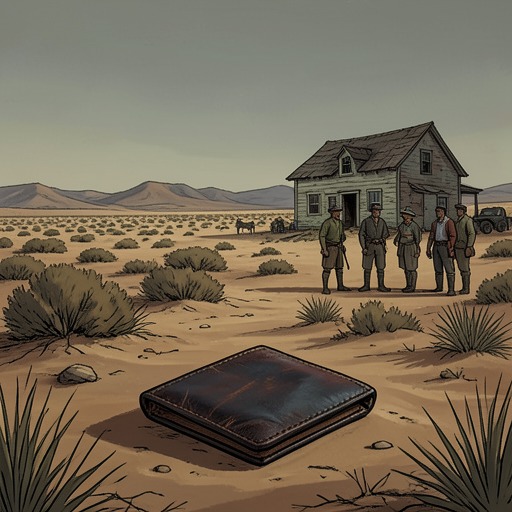
The Pasture is a broad tract of Mediterranean brush stretching towards the shore, near the walled ruins of a chemical works whose failed promise of progress left unemployment and compensation claims behind. For the municipal cleaning crews, the area had once been an easy assignment, scattered with ordinary rubbish and the occasional used condom. Over the year before the opening events, those condoms became an almost continuous carpet, marking the growth of a much larger nighttime business.
That change followed the arrival of military detachments sent to Sicily to help control the territory. Gegè, who had previously been dealing in light drugs, anticipated the soldiers’ arrival and used informal channels to secure the permissions needed to serve them. The authorizations were convoluted and unofficial: the people who controlled the area would not issue stamped permits, but Gegè obtained their consent all the same. His market flourished among the bushes and along the sandy shore, with proceeds shared by those who had allowed it to operate.
The terms of the bargain
The condition is defined in practice by what Gegè fears could bring the enterprise to an end. In conversation with Inspector Salvo Montalbano, he describes the risks of a brawl, a stabbing, or an overdose. He says the drugs are limited to marijuana and, at most, cocaine, and points to the street cleaners’ failure to find syringes as support for that claim. Whether offered as reassurance or self-protection, his account presents control of visible harm as part of running the business.
Gegè says he has twenty-eight people working at the Pasture, including sex workers of different kinds. Filippo di Cosmo and Manuele Lo Pìparo are there specifically to prevent trouble. Their presence makes the condition operational: the market depends not merely on attracting customers, but on watching over the site and containing incidents before they become public or demand intervention.
Enforcement and official tolerance
The rule also governs Gegè’s dealings with Giambalvo, the chief of vice, who, Gegè says, is continually watching him. Giambalvo will tolerate the operation as long as it creates no complications or major scandal. The arrangement is therefore not a simple absence of policing: the threat of official interference remains close, and continued business depends on staying within a tacit limit.
Montalbano interprets that tolerance as self-interest. He suggests that Giambalvo does not want the Pasture closed because he would lose his cut. When Montalbano presses Gegè about whether the payment is a wage or a percentage, Gegè smiles and turns the question into a joke about the inspector’s poor salary and clothes; he does not disclose the amount or form of the payment. The exchange leaves the suspected financial arrangement visible without making its details certain.
Wider significance
The Pasture’s operating condition joins precarious work and illicit enterprise to political and administrative patronage. Pino Catalane and Saro Montaperto, unemployed as land surveyors, have temporary cleaning jobs at Splendour after political string-pulling helped secure their appointments. When two other workers are arrested after attempting a supermarket robbery, Pino and Saro are assigned the vacant Pasture sector. Their official work brings them into daily contact with the residue of a market whose existence depends on unofficial protection.
The rule’s force lies in its narrowness: it does not require the business to become lawful, only for its disorder to remain manageable. Gegè’s precautions, the chief’s conditional tolerance, and the suspected sharing of proceeds form a system in which control and profit coexist. The Pasture is thus neither simply outside authority nor straightforwardly governed by it; its business persists in the space between informal permission and the threat of being shut down.